The Two Faces of Anonymity on Random Video Chat

Table of Contents
- The Mask That Makes You Honest
- Anonymity Has Two Very Different Faces
- Why the Same Anonymity Turns Toxic
- How to Keep the Good and Dodge the Bad
- Frequently Asked Questions
There is a reason adult random video chat feels more real than almost any other kind of interaction: you are anonymous. Nobody knows your name, your job, or your history, so you can say what you actually feel instead of performing for a reputation. That is the honest side of the mask. But the very same anonymity that sets you free also sets free the worst instincts of some people, and if you do not understand both sides, you will eventually get burned.
The Mask That Makes You Honest
Anonymity removes the social cost of being honest. Without a face, a name, or a reputation to protect, people open up far more quickly than they ever would face to face. That is why two complete strangers on a random chat can share things in minutes that they would never tell a colleague or a friend.
This is not just a feeling, it is a documented effect. Psychologists describe the way anonymity lowers our normal restraints as the online disinhibition effect, and one of its clearest, most useful consequences is that it encourages people to self-disclose and express themselves honestly. Research and expert commentary on anonymous online interaction explain exactly how removing identity lowers the barriers to sharing, which is what makes random chat feel so genuinely candid.
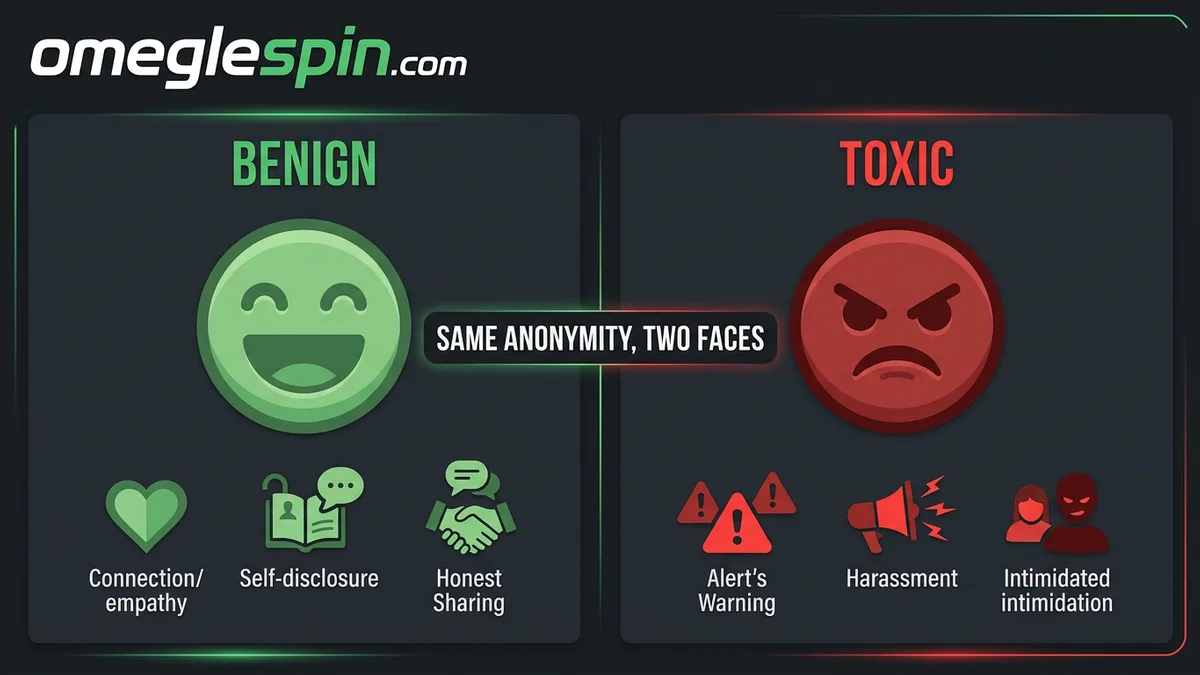
Anonymity Has Two Very Different Faces
Here is the part that matters: the same mask does two opposite jobs. In its benign form, anonymity lets shy people open up, lets strangers support each other, and creates space for honest, vulnerable, sometimes beautiful interaction. In its toxic form, it lets rude, cruel, or predatory people act with no fear of consequences. Both are real, and both are always present on any anonymous platform.
The practical takeaway is that you cannot know which face a stranger will wear until you start talking. The anonymity is a feature for the honest ones and a shield for the bad ones, and you have to deal with both at the same time.
Why the Same Anonymity Turns Toxic
The reason the mask turns toxic for some people is that removing consequences removes restraint. Someone who would never insult a person to their face can say anything when they feel invisible, because their actions cannot easily be traced back to them. The disinhibition that enables honest sharing is the exact same mechanism that enables cruelty, harassment, and abuse.
That is why safety matters on random chat even on a good night. A stranger who seems warm can turn on you in a second, and the anonymity that made them bold enough to be forward with you is the same anonymity that lets them be awful to you with no accountability. The practical cam2cam session tips on this site cover how to keep a session fun, and the Tinychat vs Omegle NSFW comparison shows how the crowd and moderation differ across platforms, which changes how much toxic anonymity you will actually meet.
How to Keep the Good and Dodge the Bad
You do not have to give up the honest, freeing side of anonymity to stay safe. You just have to build a few habits that keep the mask working for you instead of against you:
- Never share identifying details. Not your real name, city, workplace, or anything that could pin down who you are. That keeps the honest mask on and the dangerous ones off your trail.
- Use an interest filter to land in better crowds. The interest filter guide helps you connect with people who are actually there for a positive, adult, consensual session rather than a toxic dump.
- Trust your gut and leave fast. If a session feels off, you do not owe anyone an explanation. The anonymity works both ways, you can vanish too.
- Block and report freely. One click is all it takes, and it protects both you and everyone who meets that person next.
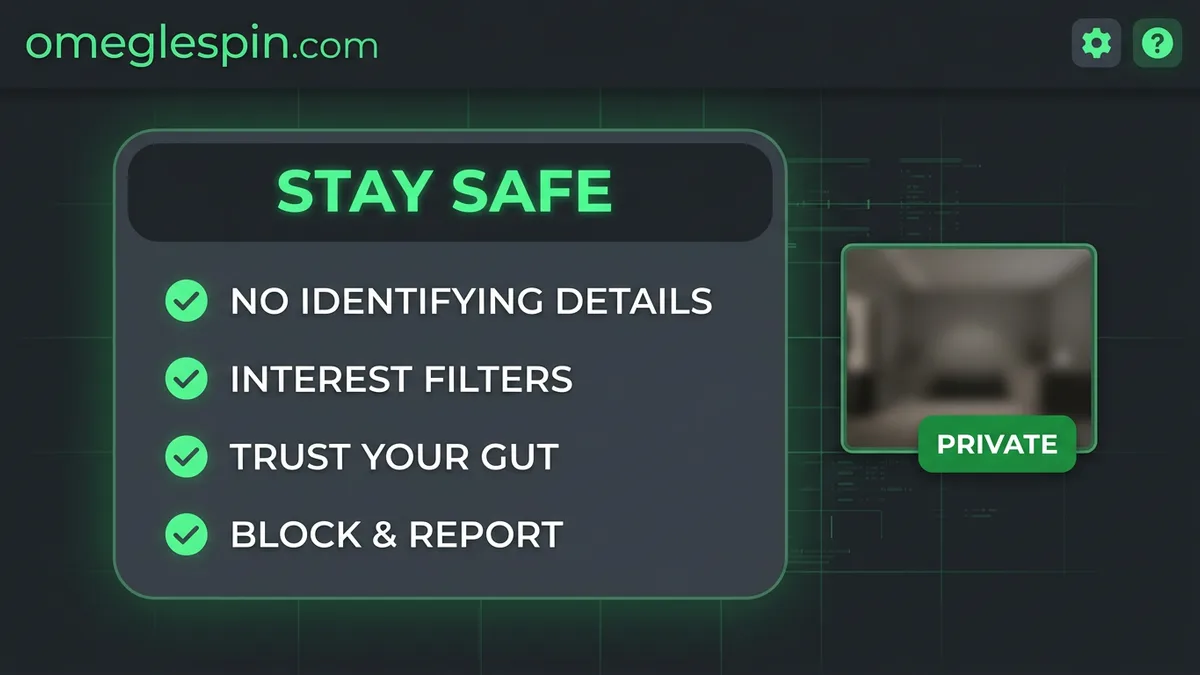
Understanding anonymity this way turns it from a risk into a tool. Keep your identity private, choose the right rooms, and trust your instincts, and you get to enjoy the rare, honest, unguarded connection that anonymity makes possible without paying for the dark side of it. That balance is the whole secret to enjoying random video chat safely.
Frequently Asked Questions
Does anonymity really make people more honest?
Yes, in many cases. Psychologists call it the online disinhibition effect: when people feel anonymous and invisible, normal social restraints drop, which encourages more honest and open self-expression.
Why does the same anonymity also cause toxic behavior?
Because removing consequences removes restraint for everyone. The disinhibition that lets honest people open up also lets cruel people harass and abuse with no fear of being held accountable.
How can I enjoy anonymity without risking my safety?
Never share identifying details, use interest filters to land in better crowds, trust your instincts, and use the block and report buttons freely. The anonymity protects you just as much as anyone else.

